Stainless Steel Watch Bands Guide: Parts, Clasps, Materials & Finishes
Stainless steel watch bands are a popular choice for both classic and modern watches thanks to their durability, versatile appearance and easy maintenance. They pair naturally with business, casual and dress watches while offering excellent resistance to everyday wear.
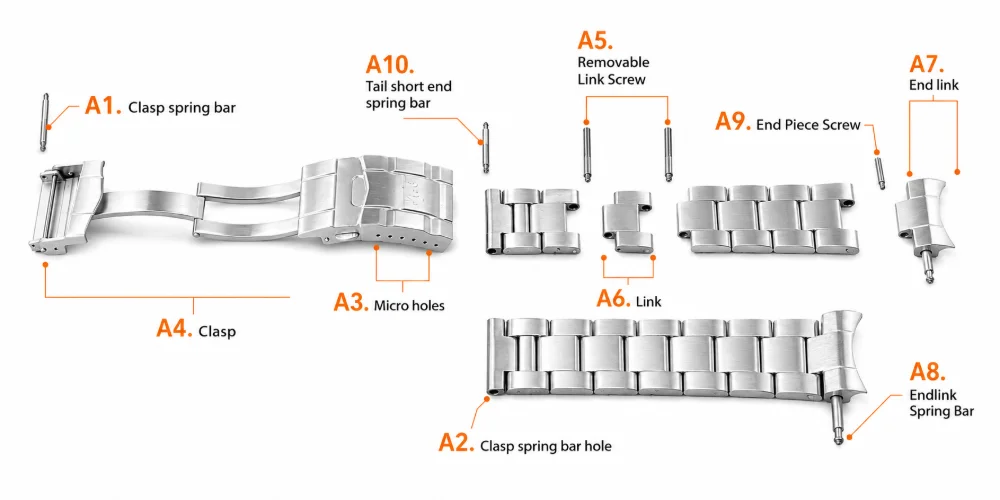
Understanding the construction of a metal watch bracelet can also make it easier to choose the right band, adjust the bracelet length and replace individual components.
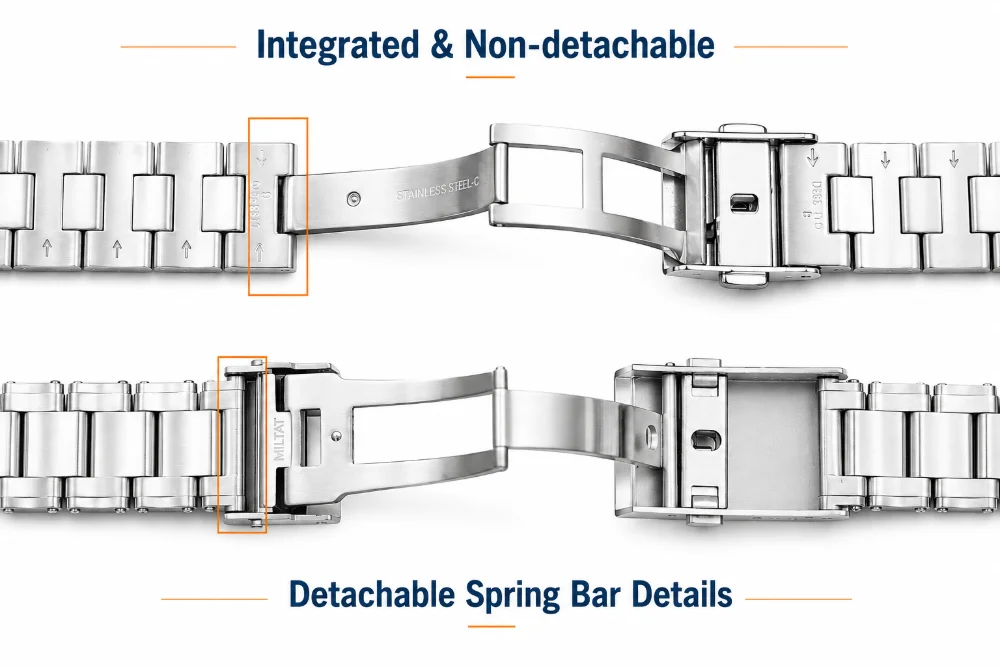
A typical stainless steel watch band consists of several key parts, including the clasp, spring bars, removable links, link screws, end links and adjustment holes. Depending on the bracelet design, these components may be removable, integrated or permanently attached.
For bracelet sizing, removable link screws allow selected links to be added or removed, while micro-adjustment holes on the clasp provide finer wrist-size adjustment. The end link connects the bracelet to the watch case through an end-link spring bar.
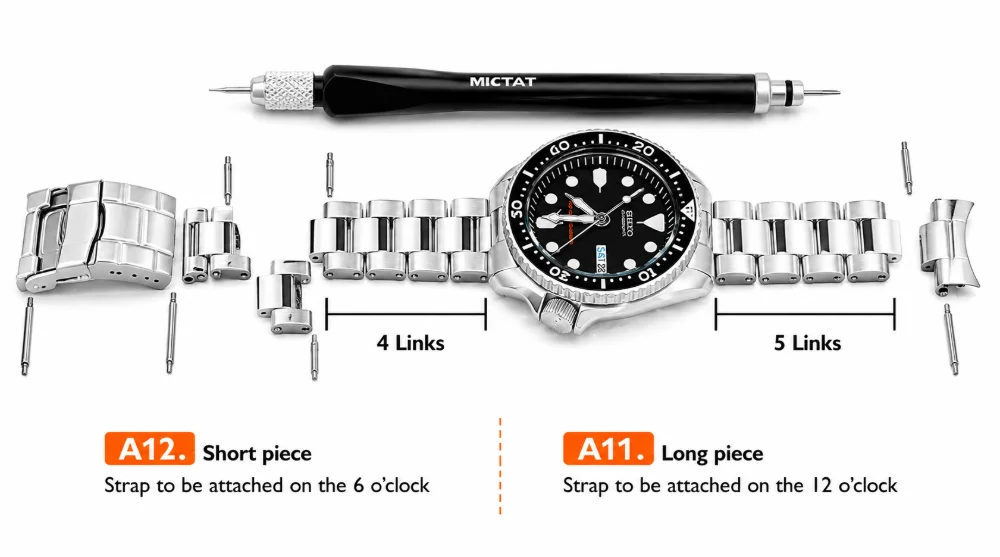
The longer section of the bracelet is normally installed on the 12 o’clock side, while the shorter section is installed on the 6 o’clock side.
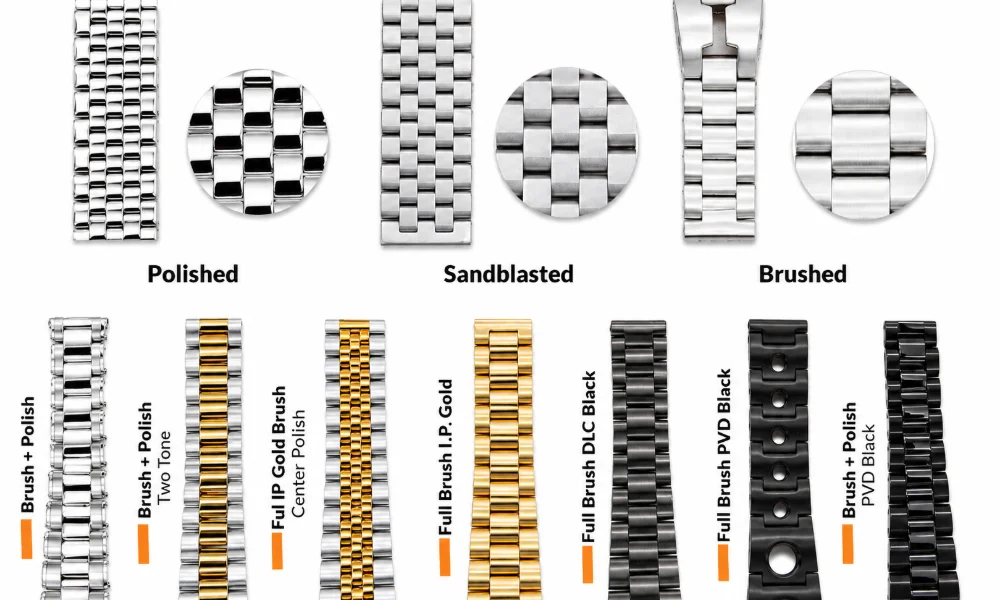
Common stainless steel grades used for watch bands include 304, 316L and 904, while titanium, 14K/18K gold and sterling silver are other metal options mentioned in the source. Popular surface finishes include polished, brushed, brushed-and-polished, PVD black, IP gold, DLC and sandblasted finishes.
More Knowledge
essential-watch-band-tools-for-strap-replacement-and-bracelet-adjustment
leather-watch-strap-guide-parts-sizes-profiles-how-to-choose
stainless-steel-watch-bands-guide-parts-clasps-materials-finishes
FAQ
A stainless steel watch band typically includes links, removable link screws, end links, spring bars, a clasp and micro-adjustment holes. The end links connect the bracelet to the watch case, while removable links and clasp adjustment holes help achieve the correct wrist size.
The bracelet can usually be resized by removing or adding adjustable links. Removable link screws secure these links, while micro-adjustment holes on the clasp provide smaller length adjustments for a more precise fit. Not every link is necessarily removable.
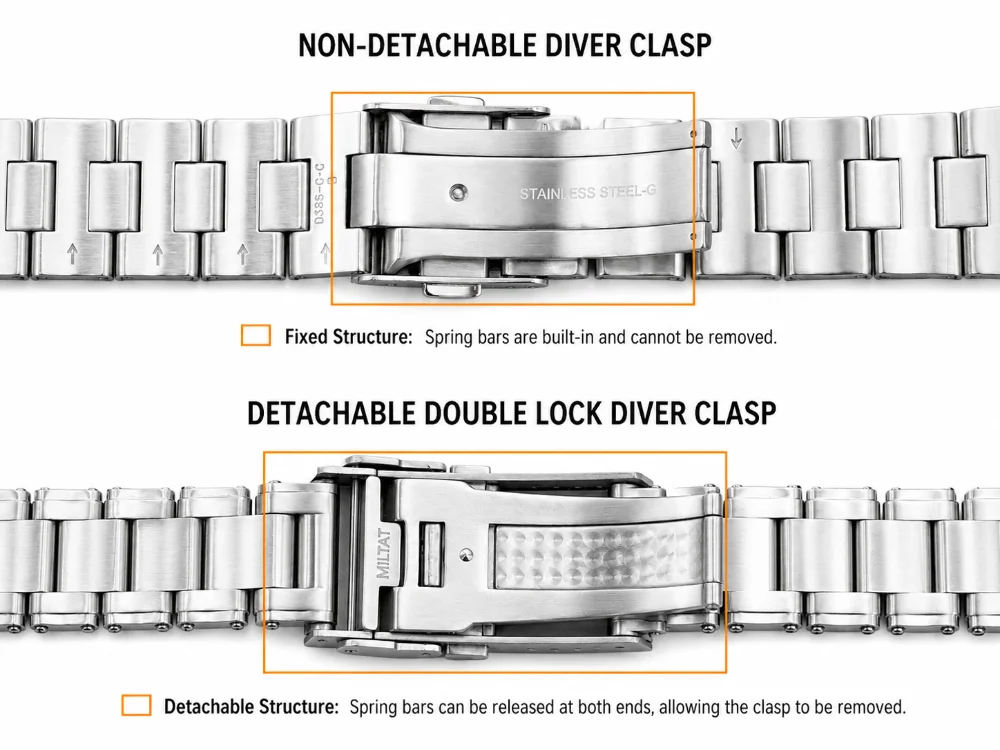
Metal watch bracelets can use different connection structures, including integrated or non-detachable components and detachable spring-bar or clasp designs. A detachable design generally makes bracelet servicing or component replacement more convenient. The supplied material specifically illustrates integrated/non-detachable spring-bar structures and compares non-detachable diver clasps with detachable double-lock diver clasps.
Common grades include 304, 316L and 904 stainless steel. According to the supplied material, 304 is positioned as the more economical option, 316L offers a strong quality-to-price balance, and 904 provides higher durability while being more difficult and expensive to process.
Common finishes include polished, brushed, brushed and polished, PVD black, IP gold, DLC and sandblasted surfaces. These treatments create different textures, reflections and visual styles, allowing a metal bracelet to complement everything from dress watches to sport watches.


